Bitcoin Smart Contracts for Physical Goods
In an efficient society, the quantity of intermediaries that profit on transactions of physical goods should be minimized. In order to move in this direction, an online marketplace leveraging Bitcoin smart contracts seems useful. This marketplace would allow buyers and sellers to conduct business, while reducing the capital lost to an intermediary. Ideally it would be open source, with future developments and community arbitrators funded by a low % take rate per network transaction.
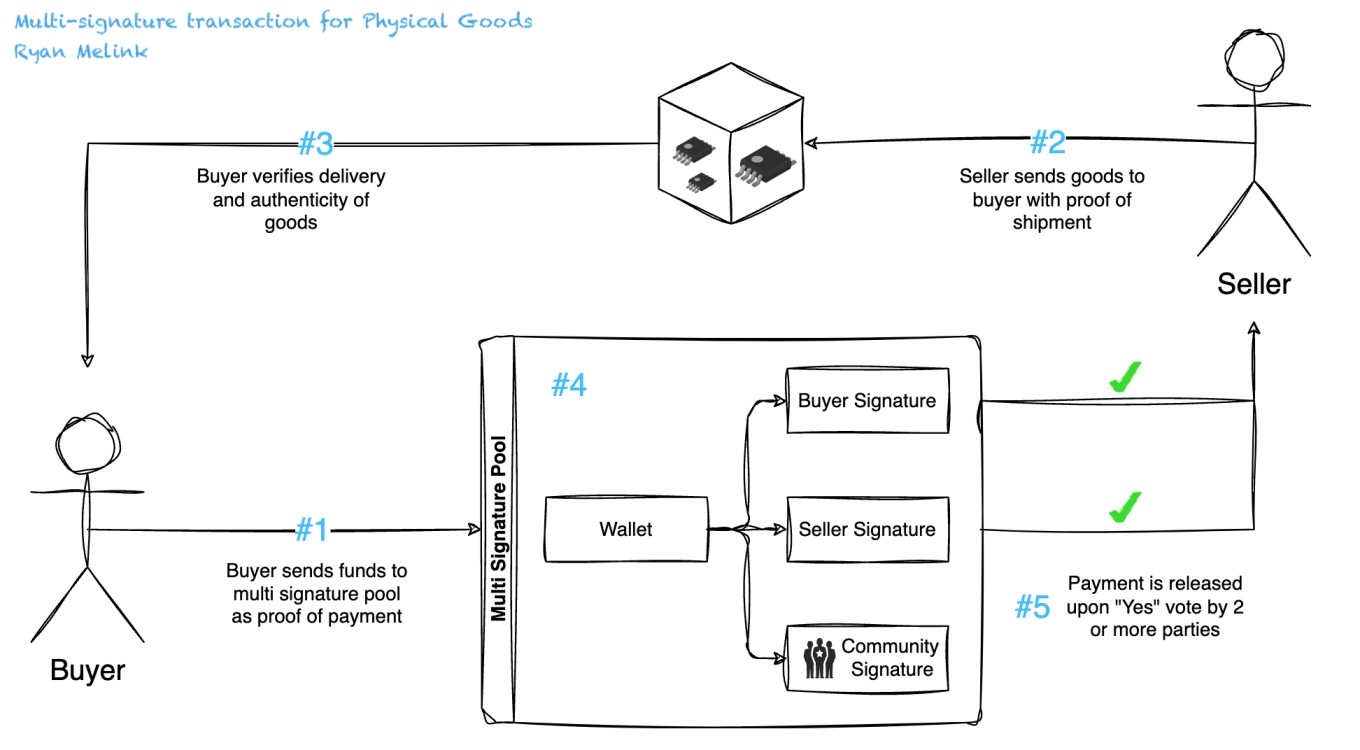
I devised a high-level model that may be used to enable fair transactions of physical goods and funds between buyers and sellers. This model uses a Bitcoin 2-of-3 multi-signature address that requires two out of the three private keys to sign a transaction before it is settled. The buyer, seller, and community arbitrator would each generate their own Bitcoin public and private keys. A multi-signature address is then generated which provides each party with 1/3 signature power. From here, the smart contract process will begin:
Depositing Funds
The buyer sends the agreed Bitcoin amount to the multi-signature address. This transaction is recorded on Bitcoin’s blockchain.
Seller Sends Goods
Once the funds are confirmed to be in the multi-signature wallet, the seller ships the goods to the buyer.
Buyer Verifies Goods
Upon receipt, the buyer inspects the goods. If they are satisfied, they are ready to sign a transaction releasing the funds to the seller.
Signing the Transaction
Both the buyer and the seller need to sign a transaction for the funds to be released. If there’s a dispute and a party refuses to sign, the community arbitrator can review the case and provide a deciding signature. Depending on the outcome of the dispute resolution, this will either release the funds to the seller or return them to the buyer.
Executing the Transaction
In a successful exchange with no dispute and 2 signatures, the funds are now transferred to the seller's Bitcoin address.